
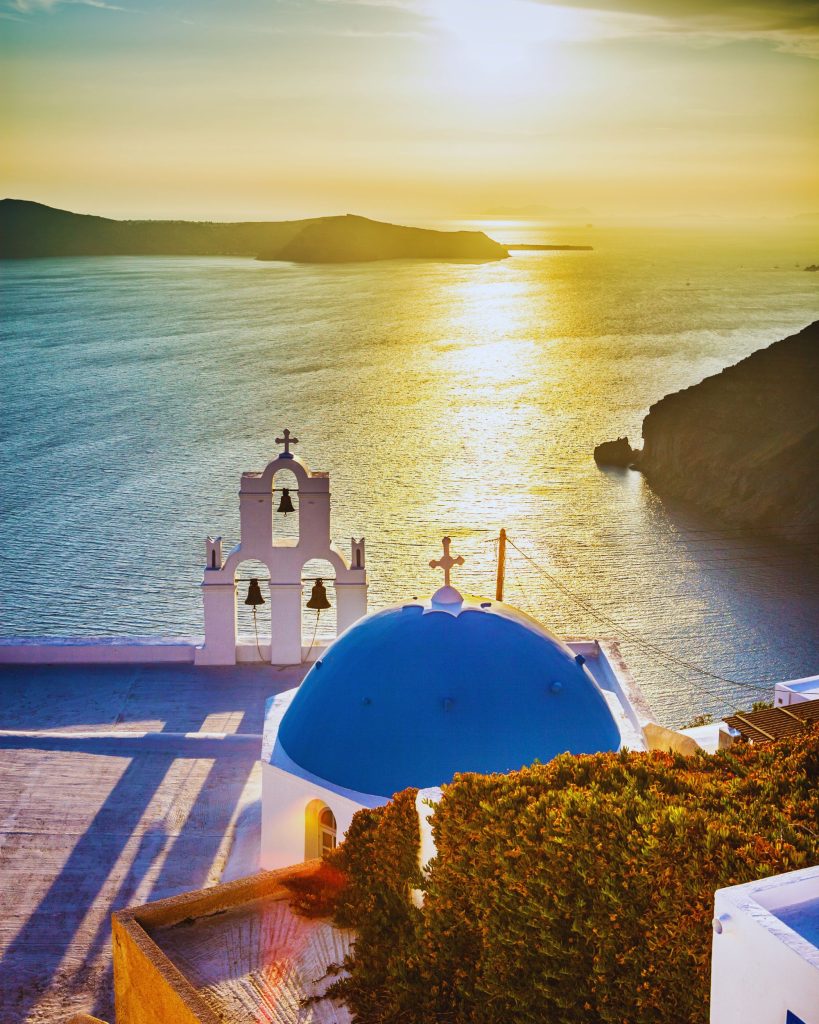
Santorini exists in the collective imagination almost before you arrive: whitewashed buildings cascading down volcanic cliffs, blue-domed churches against a bright sky, sunsets so celebrated that entire evenings are built around watching them. The image is not exaggerated, and the island turns out to be richer than the postcard suggests, with far more to it than its most photographed viewpoints.
For the solo woman traveler, Santorini solo travel offers a rare combination: real beauty, a well-developed tourism setup that makes finding your way around simple, and considerably more depth than its reputation as a sunset backdrop lets on. If this is your first big solo trip, it also slots naturally into the wider picture of solo travel for women over 50.
Why Santorini Works So Well for Solo Women
Santorini’s compact size and established bus network make it one of the easier Greek islands to explore without a car, a real advantage when you would rather not drive unfamiliar roads. The island’s tourism infrastructure, built up over decades, means English is widely spoken across the island’s hotels, tavernas, and shops, solo dining is a normal part of the day, and the rhythm of island life suits independent travelers of every kind. You are rarely far from a cafe terrace, a caldera view, or a bus back to your base.
The travel essentials every solo woman over 50 should have before she goes: packing, staying safe, money, eating alone, and where to base yourself. Add your details and it is yours, free.
No spam, ever.
Fira, Oia & the Caldera Villages
Fira, the island’s capital, offers dramatic caldera views, a walkable town center, and more affordable dining and accommodation than its famous neighbor to the north. A morning spent wandering Fira’s narrow streets, before the day’s cruise-ship crowds arrive, reveals a town with real character beneath its role as the island’s practical hub.
Oia, the village most responsible for Santorini’s postcard image, deserves a visit, but with a specific strategy that most first-time visitors miss. The famous sunset viewpoints become genuinely crowded in the hour before sunset during peak season. Arriving several hours earlier, wandering the village’s blue-domed churches and boutique shops while it is still quiet, and finding your own spot along the caldera edge for the sunset itself, gives you a far more peaceful version of an evening most visitors treat as one crowded event.
Wandersister tip: book a table for dinner in Oia on a restaurant terrace facing the caldera, timed to the sunset. You get the view in comfort, with a meal in front of you, rather than standing in a crowd at the public overlooks. A small booking that changes the whole evening.
Wine & Volcanic-Soil Cooking
Santorini’s volcanic soil produces distinctive wine, and the island’s wineries make for some of the most rewarding afternoons anywhere on Santorini. Santo Wines, perched on the caldera edge, pairs excellent tasting flights with one of the finest views on the island, an easy and pleasant solo afternoon. The island’s volcanic wines are worth a proper afternoon, and a Santorini wine tasting tour visits the old estates with the driving handled for you.
Beyond wine, the food deserves attention well past the usual tourist fare. Fava, a Santorini specialty made from yellow split peas, and the island’s small, intensely flavored tomatoes, grown in volcanic soil with almost no water, turn up throughout the best tavernas in dishes far more interesting than the generic Greek salad found elsewhere. Eating well by yourself is part of the pleasure here; if the idea is still new to you, our guide to how to eat alone has the small tricks that make it feel easy.
Beyond the Caldera: The Island’s Quieter Side
Santorini’s eastern and southern coasts, far less visited than the caldera-facing villages, offer a different side of the island.
The Red Beach, named for its striking volcanic red sand and cliffs, is best admired from the official viewpoint on the path above, where the full sweep of red rock against the sea opens up in front of you. The sand sits beneath unstable cliffs, so the overlook, or the deck of a boat, is the loveliest and most reliable way to take it in.
Pyrgos, a hilltop village in the interior, has a quieter, more local feel than the caldera towns, with narrow medieval streets and a fine viewpoint from its old fortress ruins.
Wandersister tip: give yourself one day with a rental car and go exploring. Santorini’s back roads are easy going, and a single day behind the wheel turns up the version of the island the cruise crowds never see: the inland villages, the quiet beaches, and the viewpoints with almost no one else at them. For the caldera from the water, a caldera catamaran cruise is the loveliest way to see the cliffs and the hot springs.
Where to Stay in Santorini
Santorini rewards choosing your base by view and village rather than by price alone.bWhere you base yourself shapes the whole trip, so it helps to choose your village with care:
Fira is the island’s hub and the easiest base. The bus network radiates from here, restaurants and shops are plentiful, and prices sit lower than in Oia. The trade-off is that it is the busiest of the three, especially when cruise ships are in port.
Oia is the most beautiful village and the one the postcards come from, with the celebrated sunset and the prettiest lanes. It is also the most expensive and the most crowded at golden hour, and it sits farthest from the airport and the port.
Imerovigli is the quiet choice, set on the caldera’s highest stretch with wide open views and a calmer evening mood. It has fewer restaurants and shops of its own, so you trade a little convenience for peace.
A few places we love along the caldera:
- Athina Luxury Suites, in the heart of Fira, walkable to everything with full caldera views.
- Aressana Spa Hotel & Suites, a serene Small Luxury Hotels member on the quieter edge of Fira, with a lovely spa; if a few restorative days are the point of the trip, it pairs well with our guide to solo wellness retreats over 50.
- Grace Hotel in Imerovigli, set along the caldera’s highest stretch, calm and panoramic.
- And if you would like to spoil yourself, the cliff-clinging Katikies in Oia is the one: infinity pools over the caldera and the island’s most famous sunset from your own terrace.
Prefer to compare for yourself? Browse Santorini hotels on Expedia and pick the village and view that suit you.
Is Santorini Safe for Solo Women?
Santorini is a reassuring place to travel by yourself. It is a well-established destination with a steady flow of international visitors, English is widely spoken where visitors go, and the villages are easy to walk and well lit in the evenings. The usual sensible habits are all it asks: keep an eye on your belongings in the busy sunset crowds, and note that the terrain is steep, with plenty of stairs and cobbled paths between the caldera villages. If you like to weigh up a destination before you book, see our wider look at the safest countries for solo female travelers.
When to Visit
Santorini’s peak season, July and August, brings the most reliable heat alongside the biggest crowds and the highest prices, especially around the sunset viewpoints. May and early June, along with September and early October, give you thinner crowds and lower prices while keeping lovely, warm weather, which makes these the wiser months if a calmer trip matters more to you than guaranteed peak-summer heat. Whenever you go, book your caldera-view stay well in advance; the best terraces sell out months ahead.
Getting Around & Practical Notes
Santorini has its own airport (Santorini/Thira, JTR) with direct flights from several European hubs in season, and regular ferries connect it to Athens and the other Cyclades. If you are coming from Athens, you can compare and book the Athens to Santorini ferry, an easy and scenic approach to the island. For the ride from the airport or port to your hotel, a pre-booked Welcome Pickups transfer means a friendly driver and a fixed price waiting for you, rather than a taxi queue after a travel day.
On the island itself, the local bus network connects the main villages reliably enough for a car-free trip, and a travel eSIM from Airalo keeps you online for maps and ferry times the moment you land. Cards are widely accepted in hotels, restaurants, and larger shops, but it is worth carrying some euros in cash for the local buses, smaller tavernas, and the occasional place that does not take cards.
Santorini is a place of stairs and uneven cobblestones, particularly in Fira and Oia, so a wheeled hard-shell suitcase from Samsonite that you can carry up a few steps beats an overpacked bag. And sort your travel insurance before you go, so a missed ferry or a cancelled flight is a minor annoyance rather than a real problem.
Frequently Asked Questions
Is Santorini safe for solo female travelers over 50?
Yes. It is a well-established destination with constant international visitors, widely spoken English, and walkable, well-lit villages. Normal travel sense is all it asks: mind your belongings in the sunset crowds and take the steep, cobbled terrain into account.
How many days do you need in Santorini?
Three to four days is the sweet spot for a solo trip: enough for Fira and Oia, a winery afternoon, a catamaran cruise, and a day exploring the quieter southern and eastern side without rushing.
What is the best area to stay in Santorini, Fira, Oia or Imerovigli?
Fira is the most convenient and best value, with the bus hub and the widest choice of restaurants. Imerovigli is the calmest of the caldera villages. Oia is the most beautiful and the most expensive, lovely if the view is the whole point of your trip.
When is the best time to visit Santorini?
May and early June, plus September and early October: warm, bright, and far less crowded and costly than July and August.
Do you need a car in Santorini?
No, not for getting between the main villages. The bus network links them and most visitors manage happily without one. That said, a rental car is worth considering if you would like to reach the island’s hidden corners, the inland villages, the quieter beaches, and the viewpoints the buses do not reach. You can compare car rental options and pick one up for a day or two.
Is Santorini good for solo travel?
Very. It is easy to navigate, safe, English-speaking, and set up for independent travelers, with enough beauty, wine, food, and quiet corners to fill several unrushed days on your own terms.
Is Santorini Solo Travel Worth It?
Santorini’s fame is not undeserved, and the island rewards anyone willing to move past its most photographed hour and viewpoint. Arrive early, wander further, linger over a glass of volcanic wine instead of racing to the next overlook, and Santorini gives you far more than a postcard: a beautiful island trip shaped entirely around what you feel like doing.
More of Greece to Explore
Planning the rest of the trip? Santorini sits beautifully inside a longer Greek route. See our full guide to Greece solo female travel over 50, the elegant capital in Athens solo travel, the big, varied island next door in Crete solo travel, and how it all strings together in our 10-day Greece itinerary for women over 50, a relaxed route that begins in Athens and sails out through the islands before reaching the caldera.
When you are ready to plan it, and to swap notes with other women over 50 who have done it or are dreaming of it, come inside the Wandersister Circle, our private space for independent women who travel solo. It is free to step inside, and the solo female traveler over 50 will find good company waiting.