
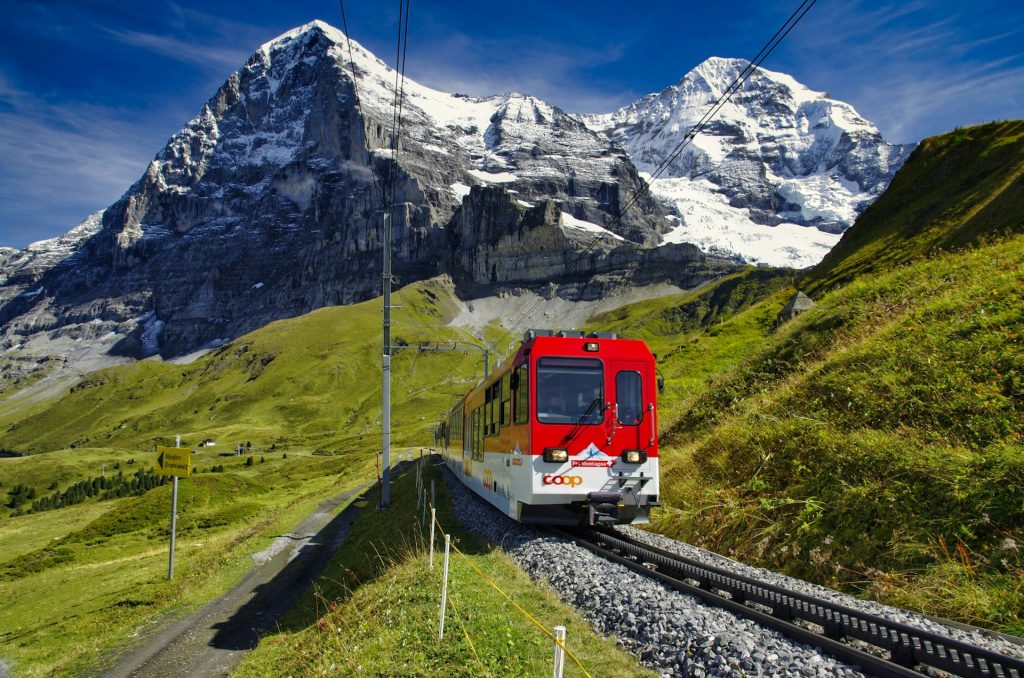
When you picture an independent alpine escape, Switzerland solo travel for women over 50 runs on a schedule you can set your watch to, and a landscape that makes you forget to check the time at all. Trains arrive within seconds of their posted minute. Lakes sit mirror-still beneath mountains that look almost too precise to be real. For the solo woman traveler over fifty, this combination, total reliability paired with staggering natural beauty, makes the country one of the easiest, safest, and most rewarding trips in Europe.
Switzerland asks very little of you beyond showing up. The country is compact, the transit system is the best on the continent, and the cultural default is order rather than chaos. For the wider confidence behind any trip like this, our pillar guide to solo travel for women over 50 is a good companion, and if you are weighing it against other destinations, our roundup of the best European cities for solo women over 50 sets the scene.
Is Switzerland Safe for Solo Female Travelers Over 50?
Switzerland consistently ranks among the safest countries in the world, and that safety is not an abstract statistic, it is something you feel within the first hour. Streets are clean and well-lit, public transport runs late and reliably, and violent crime is rare enough that it barely factors into planning a trip here at all. The main practical consideration is not personal safety but cost. Switzerland is consistently among the priciest countries in Europe, and it is worth budgeting for honestly rather than being surprised by it mid-trip. German, French, and Italian are all official languages depending on the region, but English is widely spoken in every tourist area.
One thing worth sorting before you go is your travel insurance, and here is the cover we recommend: travel insurance for women over 50.
The travel essentials every solo woman over 50 should have before she goes: packing, staying safe, money, eating alone, and where to base yourself. Add your details and it is yours, free.
No spam, ever.
Getting Around: The Swiss Rail Network
This is where Switzerland sets itself apart from nearly every other mountain destination on earth: you do not need to drive to see the Alps properly. The rail network reaches deep into terrain that would otherwise require a car, climbing to glacier viewpoints, crossing valleys on dramatic viaducts, and connecting towns that feel impossibly remote, all on a precise, easy-to-navigate schedule. Connections between train and bus are frequently timed to the minute.
A Swiss Travel Pass covers trains, buses, and boats across the country and is genuinely worth the cost for a trip of more than a few days, removing the need to think about individual tickets at all. You can also compare routes, times, and fares, and book ahead in English, through Omio, so your scenic days are settled before you arrive. For a calm arrival on your first evening, a private airport welcome pickup takes you straight to your hotel.
Where to Stay in Switzerland for Women Over 50
Switzerland rewards a multi-base approach more than most countries, since its regions differ so distinctly in character. Lucerne makes an outstanding first base, a compact, walkable old town on a lake, framed by mountains, and central enough to reach most of the country easily by train. Interlaken, between two lakes and beneath the Jungfrau massif, is the natural base for the high mountains. Zermatt, car-free and dominated by the Matterhorn, is the place to base yourself if the peaks are the whole point. Geneva and Bern offer a more urban, cultured alternative. These four are refined, wonderfully placed, and a joy to come home to after a full day on the rails:
- Hotel Metropole Interlaken, a classic four-star in the heart of Interlaken with Jungfrau views from its upper floors, steps from the station and the lake boats.
- Hotel Art Deco Montana, Lucerne, a stylish four-star perched above the lake with a funicular of its own and some of the best views in the city.
- Hotel Beau Rivage, a warm, central four-star in Zermatt with Matterhorn views and its own spa, an easy place to fold a little restoration into the trip, the kind our solo wellness retreats over 50 guide is full of.
- And if you would like to spoil yourself, Mandarin Oriental Palace, Luzern is the one: a restored lakefront palace with a serene spa and a sense of occasion from the moment you arrive.
You can always browse more hotels in Switzerland on Expedia to find the base and price that suit you best.
The Best Things to Do: The Alps by Train
The Jungfraujoch, “Top of Europe,” is reachable entirely by train from Interlaken, climbing to over 3,400 meters through tunnels carved into the mountain, and a guided trip to Jungfraujoch, Top of Europe hands you the planning and the connections. The Glacier Express, connecting Zermatt and St. Moritz, is one of the most celebrated scenic train journeys in the world, crossing 291 bridges over eight hours of continuously changing alpine scenery. Shorter and equally beautiful, the Golden Pass Line runs through Lucerne and Montreux, ideal for a single spectacular day. And from Lucerne, the ride up Mount Pilatus on the world’s steepest cogwheel railway is a half-day of pure drama.
The Best Time to Visit Switzerland for Solo Travelers
Switzerland has two distinct high seasons. Summer, roughly June through September, offers the best hiking conditions, the longest days, and full access to high-altitude trails and viewpoints, though it is also the busiest and most expensive, particularly in the mountain resorts. Winter, December through March, transforms the country into a ski destination, with Zermatt at its most atmospheric. Late spring and early autumn offer the best value and thinner crowds, with wildflowers in May and June and the first snow dusting the peaks by October.
A Week in Switzerland by Train: A Simple Itinerary
Seven days is enough for a first, satisfying loop through the best of the Alps, and the train does all the work between bases.
Days 1 to 2: Lucerne. Ease in beside the lake, walk the medieval old town and the Chapel Bridge, and take the cogwheel railway up Mount Pilatus for your first big view.
Days 3 to 4: Interlaken and the Jungfrau. A short, scenic train to Interlaken, then the climb to the Jungfraujoch, with a day left for the lakes and lower trails at your own pace.
Days 5 to 6: Zermatt and the Matterhorn. On to car-free Zermatt, where the mountain fills the end of every street, with time for the Gornergrat railway and a long lunch with a view.
Day 7: Home by the Golden Pass. A final, beautiful rail journey toward Montreux and Lake Geneva, where you can end the trip by the water before your flight home.
Dining Alone: Swiss Food Worth Experiencing
Switzerland’s food culture is built for solo enjoyment in a way that surprises many first-time visitors. Fondue and raclette are traditionally communal, but solo diners are entirely welcome at the small, cozy restaurants that specialize in them, and a single-serving fondue set is standard, not unusual. Mountain huts and lakeside cafés make solo lunches a real pleasure, particularly with a view of the Alps as company. If dining alone ever gives you pause, our guide on how to eat alone while traveling is full of warm encouragement.
Practical Tips for Your Switzerland Solo Trip
- Budget honestly. Switzerland uses the Swiss franc, not the euro, and a coffee or a simple meal costs meaningfully more than in most of Europe. Knowing that in advance takes the sting out of it.
- Get the Swiss Travel Pass for any trip longer than a few days; it covers trains, buses, and boats and saves you thinking about tickets at all.
- Pack layers for every season at once. Mountain weather shifts quickly, and a high-altitude excursion is cool even in August, so a warm layer and a waterproof go everywhere with you.
- Travel with a good carry-on. A dependable one like this Samsonite lasts for years and makes the train changes easier.
- Keep your phone connected the moment you land with a travel eSIM for maps and train times.
Frequently Asked Questions About Switzerland Solo Travel
Is Switzerland safe for solo female travelers over 50?
Exceptionally so. It is one of the safest countries in the world, with clean, well-lit towns, reliable late-running transport, and very little crime. A woman traveling on her own moves through it with real ease, day or evening.
Do you need a car in Switzerland?
No, and most visitors are better off without one. The rail, bus, and boat network reaches almost everywhere, including high mountain viewpoints, on a precise schedule. A Swiss Travel Pass covers it all, and Zermatt is car-free in any case.
How many days do you need in Switzerland?
About a week gives you a wonderful first loop: Lucerne, the Jungfrau from Interlaken, and the Matterhorn from Zermatt, with a scenic ride toward Lake Geneva to finish. Ten days lets you add St. Moritz or the Italian-speaking south.
When is the best time to visit Switzerland?
Summer for hiking and full access to the high mountains, winter for snow and skiing, and late spring or early autumn for the best value and thinner crowds. For a first visit built around the views, aim for June or September.
Is Switzerland Worth It for a Solo Female Traveler Over 50?
Without question. Switzerland offers the solo woman traveler something close to a guarantee: precision, safety, and staggering natural beauty, all reachable without a car, a language barrier, or any real logistical worry. It asks for a genuine budget and rewards it generously, with mountain views reached by train rather than trail and lake towns made for calm. For a woman over fifty who wants a trip where the only real decision is which window seat to choose, Switzerland delivers as completely, and as reliably, as the country that perfected it.
Planning More Solo Travel in Europe?
Switzerland sits at the heart of Europe, and its neighbors make a lovely next trip or a longer onward journey by train:
- Solo travel in Italy, just over the southern border and easy to reach by rail
- Lake Como, the grand Italian lakes a short train ride south
- Venice, a stone’s throw on from the lakes
- Solo travel in France, the Lake Geneva side of the country opens straight onto it
- Our cornerstone guide to solo travel for women over 50
When you’re ready to plan it, and to swap notes with other women 50+ who have done it or are dreaming of it, come inside the Wandersister Circle, our private space for independent women who travel solo. It’s free to step inside, and the solo female traveler over 50 will find good company waiting.