
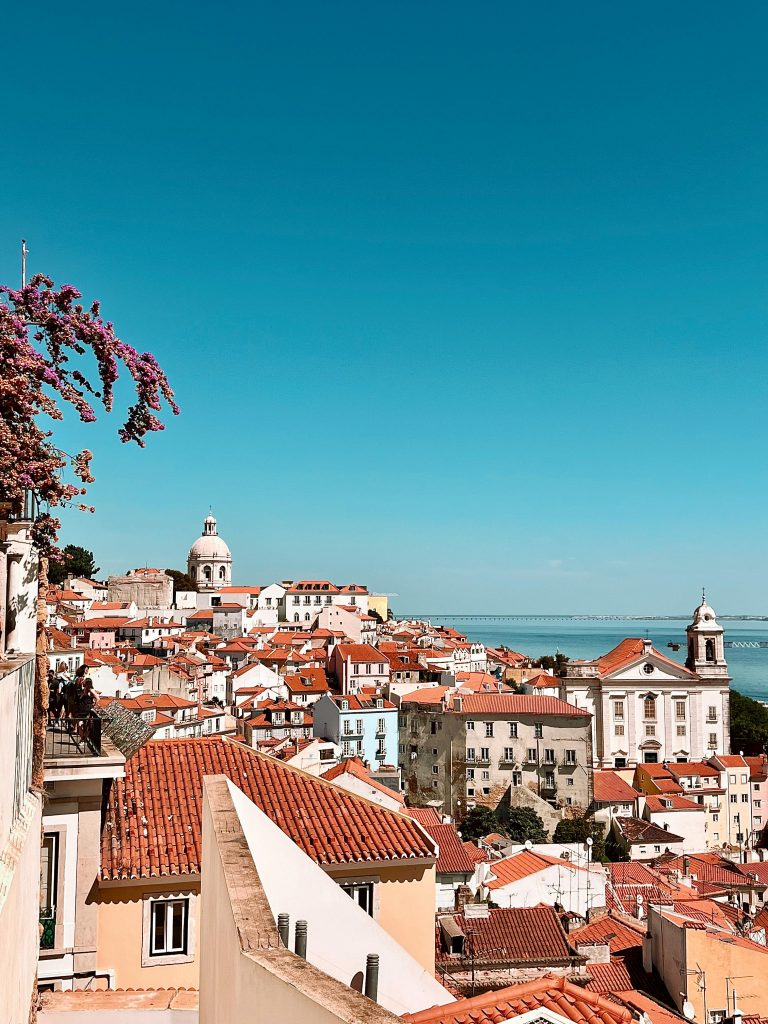
Lisbon has a way of revealing itself slowly.
Not in the rush of a checklist, not in the blur of a two-night stopover between other cities, but in the accumulation of small, unhurried days — a morning tram ride taken simply for the pleasure of it, a fado song drifting from a doorway at dusk, a vantage point discovered by accident that becomes, by the third visit, entirely your own.
A week in Lisbon, traveled slowly and solo, is one of the finest things a woman over fifty can give herself. Here is how the Wandersister approach to Lisbon actually unfolds.
Why a Week in Lisbon Rewards the Slow Traveler
Lisbon is built across seven hills, which means the city resists being seen quickly. You cannot rush a place with this much elevation change, this many narrow staircases disguised as streets, this many miradouros — the small viewpoints scattered across the city, each offering a different angle on the same glittering river.
This is, in many ways, an advantage disguised as an inconvenience. The city forces a slower rhythm on anyone who tries to walk it, and that slower rhythm is exactly where Lisbon’s real character lives — not in the two or three headline attractions most visitors rush between, but in the accumulated texture of tiled facades, unhurried café mornings, and the particular quality of golden light that settles over the city in the late afternoon.
For the solo traveler, this slowness is a gift rather than an obstacle. There is no one to hurry for, no itinerary to defend, no compromise required. Lisbon simply asks that you give it time — and rewards you generously for doing so.
Days One and Two — Finding Your Footing in Alfama and Príncipe Real
Begin in Alfama, the oldest district in Lisbon, where the streets wind upward in a pattern that seems designed more for wandering than for navigation. This is not a neighborhood to conquer with a map. It is a neighborhood to get pleasantly lost in — past tiled facades in faded blues and yellows, past small squares where elderly residents still gather in the evening, past the sound of fado drifting from restaurant doorways after dark.
Climb toward the Miradouro das Portas do Sol in the late afternoon. The view from here — red rooftops cascading toward the Tagus, the river catching the last of the sun — is one of the finest in the city, and one of the least crowded compared to the more famous viewpoints elsewhere.
For your base in these first days, Príncipe Real offers the ideal combination of elegance and calm. Leafy, residential, full of antique shops and garden squares, it is central enough to reach anything on foot yet quiet enough to return to each evening without the noise of the more tourist-heavy center.
Wandersister Tip
Take the number 28 tram at least once — not because it is famous, though it is, but because the slow, rattling climb through Alfama and Graça offers a genuinely useful orientation to the city’s geography, at a pace that lets you actually notice where you are.
A few stays we love across the old city: the boutique Santiago de Alfama in the oldest quarter, the Bairro Alto Hotel between Chiado and the river, and the rooftop-view Verride Palácio Santa Catarina.
Days Three and Four — LX Factory and the Art of the Unhurried Afternoon
By the middle of the week, settle into a different rhythm. This is where the Rule of One — the Wandersister principle of a single anchor activity per day — proves itself most valuable in Lisbon, a city with more texture than any single day can hold.
Spend one full afternoon at LX Factory, the converted industrial complex turned creative hub beneath the 25 de Abril bridge. Wander its bookshops and independent galleries without hurry. Sit somewhere with good light and a coffee, and simply watch the neighborhood move around you. This is not a place to check off — it is a place to inhabit for a few unhurried hours.
On another day, take the short train from Cais do Sodré to Belém. The Jerónimos Monastery deserves a slow, attentive visit rather than a rushed exterior photograph — its cloisters are among the most beautiful examples of Manueline architecture anywhere in Portugal. Afterward, the famous pastéis de nata at Pastéis de Belém are worth the short queue, best enjoyed on a bench along the riverside rather than standing at the counter.
Wandersister Tip
Visit Belém on a weekday morning if possible. The monastery and the pastel shop both draw significant crowds by early afternoon, particularly on weekends — a slow, quiet visit is far more achievable earlier in the day.
A lovely way to orient yourself is a tram 28 and viewpoints walk with a guide, taking in the miradouros without the uphill guesswork.
Days Five and Six — The Alfama Sunset and a Day Beyond the City
By now, Lisbon will have started to feel less like a destination and more like a place you are simply living in for a while — which is precisely the point of traveling this slowly.
Take one day to leave the city entirely. Sintra, forty minutes away by train, offers a completely different landscape — misty hills, romantic palaces, a fairytale quality that stands in deliberate contrast to Lisbon’s sun-bleached elegance. The Pena Palace, perched dramatically above the town, is worth the visit, though arriving early avoids both the crowds and the midday heat on the climb.
Back in Lisbon for your final evenings, return to a miradouro you have already visited — Miradouro de Santa Catarina is a strong choice — but this time simply to watch the sunset with no particular agenda. There is something quietly powerful about revisiting a place a second time by choice rather than necessity. It is one of the clearest signals that a city has become, briefly, yours.
Wandersister Tip
Bring a small bottle of local wine and a paper cup to Miradouro de Santa Catarina at golden hour. It is a Lisbon tradition among locals and travelers alike, entirely appropriate for a solo woman, and one of the loveliest unstructured evenings the city has to offer.
For the day beyond the city, a day trip to Sintra handles the palaces and the logistics in one easy outing.
Day Seven — A Slow Departure
Resist the urge to pack your final day with last-minute sightseeing. Instead, return to whichever neighborhood café became yours over the course of the week — every Wandersister traveler finds one, usually by day three — and spend a final unhurried morning there.
This is not wasted time. It is, in many ways, the most valuable part of the entire trip: the quiet confirmation that you came here not to see everything, but to genuinely experience something. Lisbon, more than most cities, understands the difference.
Fly into Lisbon (LIS) — compare fares and book your flights to Lisbon well in advance.
Practical Notes for the Solo Traveler
Lisbon is consistently ranked among the safest and most affordable Western European capitals, making it an excellent choice for a first extended solo trip. English is widely spoken in central areas, the Uber and Bolt networks are reliable, and the compact historic center means most of what matters is genuinely walkable, particularly once you accept the hills as part of the experience rather than an obstacle to it.
A week is enough time to move beyond the surface of Lisbon without exhausting yourself trying to see everything. It is, in the truest sense of the Wandersister philosophy, slow travel done well — depth over checklist, presence over pace, and a city that reveals its finest self to exactly the kind of traveler willing to give it the time it deserves.
Browse more Wandersister destination guides, or download the free Companion Vetting Toolkit at wandersister.com if a shared Lisbon adventure with a Travel Sister is calling to you next.
Planning the rest of your trip? See our guides to Portugal for solo women over 50 and the best European cities for solo women over 50, and the bigger picture in solo travel for women over 50. And sort your travel insurance for women over 50 before you go.
When you’re ready to plan it — and to swap notes with other women 50+ who’ve done it or are dreaming of it — come inside the Wandersister Circle, our private space for independent women who travel solo. It’s free to step inside, and the solo female traveler over 50 will find good company waiting.