
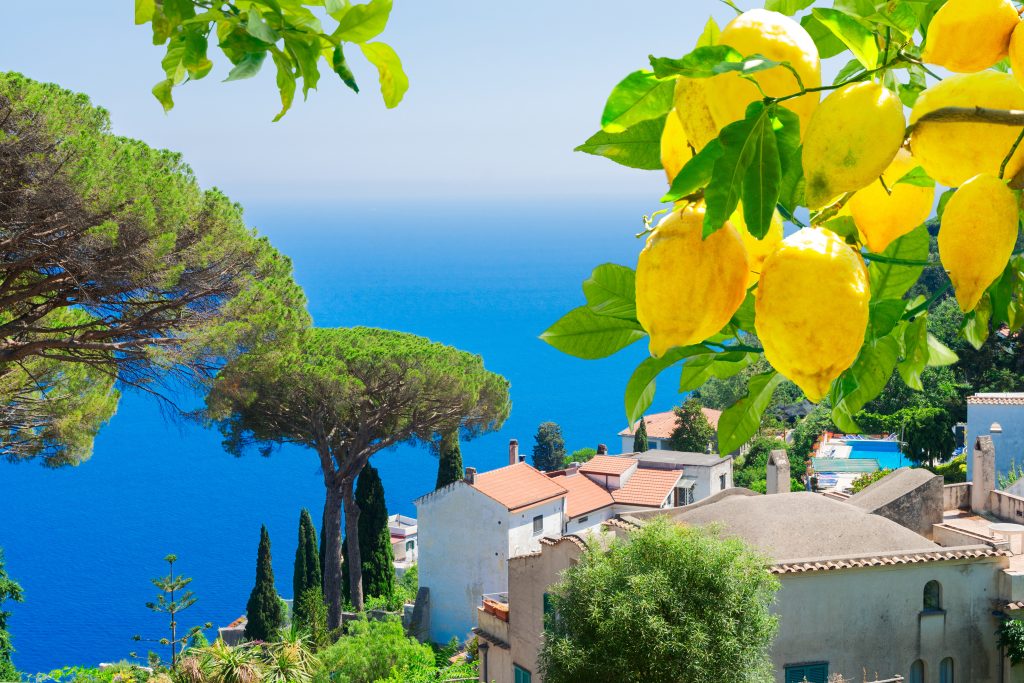
There is a particular shade of blue that exists only along the Amalfi Coast — somewhere between sapphire and turquoise, catching the light differently depending on the hour, visible from nearly every terrace, every switchback road, every lemon grove clinging improbably to the cliffside. It is a color that stays with you long after an Amalfi Coast solo trip ends.
It is the kind of place that has featured in countless films and glossy magazine spreads, and yet somehow still manages to feel entirely personal the moment you arrive — as though the coastline has been waiting, specifically, for you to notice it properly. For the solo woman traveler over fifty, a week spent moving slowly along this coast, from the dramatic cliffs of Positano to the quiet elegance of Ravello, is one of the most purely romantic journeys Italy has to offer — romantic not in the sense of requiring company, but in the older, richer sense of the word: beauty that moves something in you.
Why the Amalfi Coast Rewards Slow, Solo Travel
The coast itself resists rushing. The road connecting its towns — the famous, narrow Strada Statale 163 — winds along cliff edges with views so dramatic that hurrying past them feels almost disrespectful. Towns here are built vertically, staircases substituting for streets in many places, which means the pace of daily life is naturally unhurried simply because moving quickly is rarely possible.
This is, as with Lisbon and the hills of Provence, an advantage disguised as an inconvenience. The Amalfi Coast asks for time, and repays that patience generously — in long lunches overlooking the sea, in golden evening light that seems to last considerably longer here than it should, in the particular pleasure of having absolutely nowhere else to be.
Positano — Beautiful, and Best Experienced Off-Peak
Positano is the Amalfi Coast’s most photographed town, and for good reason — pastel houses cascading down the cliffside toward a small pebble beach, boutiques and restaurants stacked along near-vertical streets, everything arranged as though designed specifically for admiring.
The town’s beauty is genuine, but its popularity means midday visits during July and August can feel considerably more crowded than the postcards suggest. The solution, consistent with the whole Wandersister philosophy, is simple: stay overnight rather than day-tripping, and claim the early mornings and evenings as your own. A sunrise walk down toward Spiaggia Grande, before the beach chairs are arranged and the day-trippers arrive by boat, offers a version of Positano that feels almost private.
Climb to the Church of Santa Maria Assunta, with its distinctive majolica-tiled dome, for one of the town’s finest viewpoints. And in the evening, once the boats have departed and the light softens, Positano quietly returns to something closer to a real town rather than a film set.
Wandersister Tip
Book accommodation with even a partial sea view, and prioritize it over strict city-center proximity. The staircases mean everything in Positano involves some climbing regardless — a beautiful view from your room or terrace makes the effort feel entirely worthwhile.
For a stay in Positano itself, few match the terrace-and-pool elegance of Le Sirenuse.
Ravello — Elevation, Quiet, and the Best Views on the Coast
If Positano represents the Amalfi Coast’s postcard beauty, Ravello represents its quieter, more contemplative soul. Perched considerably higher than the coastal towns below, Ravello trades beach access for something arguably more valuable: space, calm, and views that stretch across the entire gulf.
Villa Rufolo and Villa Cimbrone, Ravello’s two celebrated gardens, are worth a full unhurried afternoon between them. Villa Cimbrone’s Terrace of Infinity, lined with classical busts and opening onto an uninterrupted view of sea and sky, is genuinely one of the most beautiful spots in all of Italy — the kind of place that rewards simply sitting for twenty minutes rather than photographing and moving on.
Ravello’s relative elevation and distance from the coastal road also mean it attracts a noticeably calmer crowd than Positano or Amalfi town itself — ideal for a woman traveling solo who wants the region’s beauty without its more frenetic summer energy.
Wandersister Tip
Ravello hosts a well-regarded summer music festival, with concerts staged on Villa Rufolo’s cliffside terrace overlooking the sea. If your visit aligns with a performance, a solo evening there — music, elevation, and that particular blue stretching to the horizon — is close to unforgettable.
In Ravello, the Belmond Hotel Caruso and its cliff-edge infinity pool are the coast’s most serene splurge.
Amalfi Town — The Practical, Beautiful Center
Amalfi town itself, smaller and more compact than its name suggests, makes an excellent practical base for exploring the coast — well connected by ferry and bus to both Positano and Ravello, with its own considerable charm in the form of a striking striped cathedral, a genuine working harbor, and streets that feel slightly more lived-in and less curated than Positano’s.
The Amalfi Cathedral, reached by a dramatic staircase from the main piazza, is worth the climb — its interior considerably more ornate than the striped exterior suggests. Beyond the cathedral, Amalfi’s paper museum, tucked into the Valle dei Mulini just outside town, offers a genuinely interesting glimpse into the region’s centuries-old handmade paper tradition, in a setting far removed from the coastal crowds.
In Amalfi town, Hotel Santa Caterina offers cliffside elegance with a lift down to the sea.
Getting Around the Amalfi Coast Without a Car
The Amalfi Coast is entirely navigable without driving, which matters considerably for a solo traveler who would rather not tackle the region’s notoriously narrow, cliff-edge roads alone. Ferries connect Positano, Amalfi, and Salerno with real regularity during the warmer months, offering both practical transport and some of the finest views of the coastline from the water.
SITA buses run along the coastal road connecting all the main towns, including the climb up to Ravello, though they can be crowded in peak season. For a slower, more scenic alternative, the ferry is almost always the more pleasant option when the schedule allows.
Wandersister Tip
Base yourself in either Amalfi town or Positano, and treat Ravello as a day trip by bus or taxi — its elevation and lack of direct coastal access make it a wonderful place to visit but a slightly less practical place to be based for a full week.
Two lovely ways to see the coast on your own: a small-group boat day along the coast, and a day trip to Capri with the logistics handled.
Fly into Naples and continue by road or ferry — compare fares and book your flights to Naples well in advance. From the airport, a pre-booked Welcome Pickups transfer smooths your arrival, and once you are on the coast, the ferries linking Positano, Amalfi and Sorrento are the loveliest way to travel.
Is the Amalfi Coast Safe for Solo Women Over 50? Practical Notes
The Amalfi Coast is considered safe for solo women travelers, with the coast’s steep terrain being the more relevant practical consideration than personal safety — comfortable, sturdy shoes are essential given the sheer number of stairs woven into daily life here. English is reasonably well understood in the main towns, though slightly less so than in cities like Rome or Florence.
The region is at its most crowded and expensive in July and August. Late May, June, September, and early October offer the same extraordinary light and warm Mediterranean weather with meaningfully thinner crowds — allowing the coast’s slower, more contemplative character to surface more easily.
For the woman seeking a week of genuine, unhurried beauty — cliffside views, long lunches, gardens built for sitting rather than rushing through — exploring the Amalfi Coast solo offers one of Italy’s finest arguments for traveling slowly, and traveling exactly on your own terms.
One thing worth sorting before you go is your travel insurance. Here’s the cover we recommend for solo women over 50: travel insurance for women over 50.
Practical Tips for Solo Women Over 50 on the Amalfi Coast
A few things learned the pleasant way, to make an Amalfi trip run smoothly on your own.
Base in one town, and travel out from it. Changing hotels along this coast means hauling a suitcase up and down steps; far better to unpack once and let the ferries do the moving.
Go in the shoulder season. May, late September, and October give you the warm sea and the golden light without the August crowds or the peak prices — and a table at dinner without a week’s notice.
Book the ferries and the good restaurants ahead in high season. The best terraces fill early, and a reservation saves you standing in the sun.
Choose your base by mood. Positano for glamour and steps, Amalfi town for ease and ferries, Ravello for quiet and gardens. Knowing which one suits you is half the trip.
Eat well alone. Lunch is the loveliest solo meal here — a seafront table, a carafe of local white, no rush. Aperitivo hour is made for a book and a spritz, and most kitchens are warm to a table for one.
Pack light, in shoes you can climb steps in. Everything on this coast involves stairs and sometimes a porter, so a smaller case you can manage yourself, and one comfortable pair of shoes, beat a full wardrobe every time.
Frequently Asked Questions About Solo Travel on the Amalfi Coast
Is the Amalfi Coast safe for solo female travelers over 50?
Yes. The Amalfi Coast is one of Italy’s most reassuring places to travel alone — small towns where faces grow familiar within a day, promenades busy well into the evening, and a steady stream of independent travelers of every age. Ordinary care is all it asks. The bigger practical consideration is the terrain: this is a vertical coast of steps and steep lanes, so your knees will notice it more than your nerves.
When is the best time to visit the Amalfi Coast?
Late May to mid-June and September into October are the sweet spots — warm sea, long light, gardens in bloom, and none of the July–August crush or prices. Shoulder season also means easier restaurant tables and calmer ferries. Many hotels close from November to March, so spring and autumn are ideal for a solo trip.
How many days do you need on the Amalfi Coast?
Four to five days is the comfortable minimum — enough to settle into one town, day-trip to two or three others by ferry, and still keep a slow morning or two. With a week you can add Capri and Ravello’s gardens without rushing. Any less and you spend more time arriving than being there.
Where should a first-timer base — Positano, Amalfi, or Ravello?
Positano is the postcard: glamorous, photogenic, and famously steep, best if you don’t mind steps. Amalfi town is the most practical base — flatter, central, and the main ferry hub, so everywhere else is an easy hop. Ravello sits high above the coast, quiet and green, lovely for gardens and views but a bus ride from the water. For a first visit, Amalfi town keeps everything simple.
Do you need a car on the Amalfi Coast?
No — and you’re better off without one. The coast road is narrow, winding, and short on parking, while ferries and the SITA buses link every town and a pre-booked transfer handles the airport. Skip the car and let someone else take the hairpin bends.
Is the Amalfi Coast expensive, and how do you do it well on a mid-range budget?
It can be, but it doesn’t have to be. Base in Amalfi town or nearby Praiano rather than Positano, travel in shoulder season, and lean on ferries and family-run trattorias over taxis and marquee restaurants. A room with a sea view, a ferry pass, and long lunches by the water is the Amalfi worth paying for — the rest you can keep simple.
Planning the rest of your trip? Our other Italy guides have you covered — Rome and where to stay in Rome, Florence, Venice, Tuscany, Sicily, Cinque Terre, and Lake Como — plus two ready-made routes, 10 days in Italy and a Northern Italy itinerary. Step back to the whole country with solo travel in Italy, or the bigger picture in solo travel for women over 50.
When you’re ready to plan it — and to swap notes with other women 50+ who’ve done it or are dreaming of it — come inside the Wandersister Circle, our private space for independent women who travel solo. It’s free to step inside, and the solo female traveler over 50 will find good company waiting.