
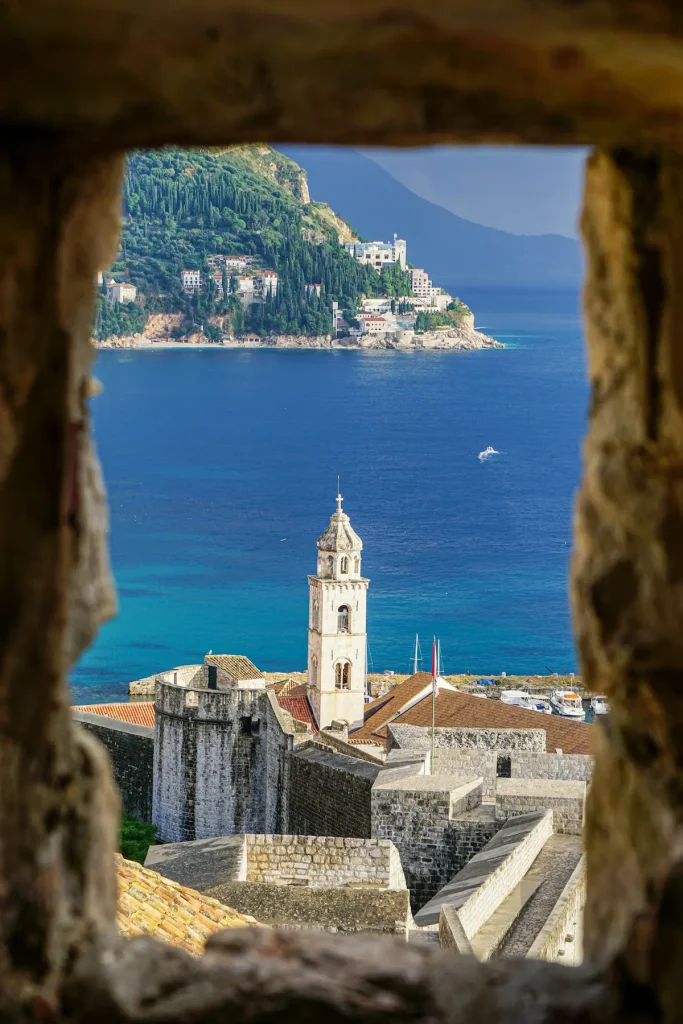
Croatia is a country built for the woman who wants the sea. A thousand miles of Adriatic coast, more than a thousand islands, walled stone towns the color of honey, and water so clear it hardly looks real — and all of it remarkably safe, easy to reach, and kinder on the purse than Italy across the water. For a woman over 50 traveling alone, it hits a rare sweet spot: beautiful and full of life, yet calm and manageable, with locals who are warm and matter-of-fact rather than fussy. You can walk ancient city walls in the morning, swim from a pine-shaded cove in the afternoon, and eat grilled fish by the harbor at night, entirely on your own schedule.
This is your complete guide to Croatia solo female travel over 50 — where to go, which islands suit you, when to travel, what it costs, and how to do it beautifully rather than as a checklist.
Is Croatia Solo Female Travel Over 50 Safe?
Yes — Croatia is one of the safest countries in Europe for a woman traveling alone, and it is a particularly easy one over 50. Crime is low, the old towns are walkable and well-lit, and public transport and ferries are reliable and calm. Locals are respectful and helpful, and a great many visitors are women in their 50s and beyond, so you will never feel like the only one traveling solo. Walking back to your room after a late harbor dinner is entirely comfortable here.
The usual sensible habits are all you need: watch your bag in the summer crush of Dubrovnik’s Old Town, keep an eye on your footing on the polished stone streets (real shoes, not slick soles), and take normal care on the one lively exception — Hvar Town, which has a late-night party scene worth sidestepping by staying slightly above or outside the center. If you like to weigh a country’s safety before you book, it is worth reading our guide to the safest countries for solo female travelers — Croatia sits comfortably near the top.
When Is the Best Time to Visit Croatia for a Solo Trip?
The sweet spots are May to June and September to early October — warm days of 20–25°C, a sea that is swimmable (gloriously so in September, after a summer of sun), ferries running on full schedules, and accommodation 30–40% cheaper than peak. Mid-September is close to perfect: warm water, thinner crowds, and space on the beaches.
July and August are hot, busy, and dear, and the famous towns can be shoulder-to-shoulder — not the season for a woman who values a little room around her. Winter is quiet and many island places close, though Zadar and the cities stay open year-round. For a first solo visit, aim for the shoulder months and you will see Croatia at its loveliest and its easiest.
Where to Go in Croatia as a Solo Woman Over 50
Croatia falls into a few distinct regions, and you need not see them all. Choose one or two and let them breathe:
Split — the liveable heart of Dalmatia, built right inside a Roman emperor’s palace, with cafés in ancient courtyards and the best ferry connections to the islands. A wonderful, walkable base.
Dubrovnik — the showpiece: the great walled city above the Adriatic. Stunning, and worth two nights, though busiest of all; go in shoulder season and stay near, not in, the Old Town.
Zadar — the quiet stunner. A handsome Roman-and-Venetian old town on a peninsula, the famous Sea Organ, wonderful sunsets, and far fewer crowds. Perfect for peace with real beauty.
Istria — the northern peninsula, Italian in feel: hill towns, truffles, olive oil, Roman Pula, and the pretty port of Rovinj. A calm, refined region for slow days and good food.
The Best Croatian Islands for Solo Travelers
The islands are the soul of the country, and the quieter ones suit a woman over 50 beautifully:
Korčula — a miniature walled town said to be Marco Polo’s birthplace, with good wine, easy lanes, and real charm. A favorite.
Vis — the farthest out and the most unspoiled, long closed to visitors and all the calmer for it; think fishing harbors and quiet coves.
Brač — home to the famous Zlatni Rat beach and easy to reach from Split.
Hvar — the sunniest and most glamorous, lovely by day; simply stay above or outside Hvar Town for calmer nights.
Where to Stay in Croatia as a Solo Woman Over 50
Base yourself in the walkable old towns, where you can leave the car behind entirely. In Split, stay in or beside Diocletian’s Palace to be steps from everything: browse boutique hotels in Split Old Town. In Dubrovnik, look just outside the walls for quiet and value — boutique hotels near Dubrovnik Old Town. For calm and beauty, Zadar is a joy: hotels in Zadar Old Town. And in Istria, the harbor town of Rovinj is the prettiest base of all: boutique hotels in Rovinj. A lovely boutique room along the coast typically runs €110–220 a night — a genuine luxury for the money.
The Best Things to Do Alone in Croatia
Much of Croatia’s pleasure is simply being by the water — but a few things belong on every list:
- Walk Dubrovnik’s city walls. The great circuit above the sea is unforgettable; go at opening or late afternoon, and see it with a guide who brings the history to life — a Dubrovnik city walls guided walk is worth it.
- Wander Diocletian’s Palace in Split at dusk, when the day-trippers leave and the stone glows.
- Swim from a cove. The single most Croatian thing you can do, and perfectly easy alone.
- Catch the sunset at Zadar’s Sea Organ, where the waves play music through the steps.
- Take a boat day. Seeing the coast from the water is a small, deserved treat — an island-hopping boat tour from Split (Blue Cave & Hvar) with swim stops is one of the loveliest days in the country.
If it is your first solo trip and the logistics feel daunting, our guide on how to plan a solo trip walks you through it step by step.
Where to Eat Alone in Croatia
Croatia is an easy country to eat alone in, because the food is unfussy and the setting does the work. Pull up a chair at a konoba — the traditional tavern — and order grilled fish or peka (meat or octopus slow-cooked under a bell), a plate of Pag cheese, and a glass of crisp Istrian white; nobody hurries you, and a table for one by the harbor is completely normal. Coffee is a national ritual here, so a long morning kava with a book is time perfectly spent. If dining alone still gives you a flutter, our piece on how to eat alone while traveling is full of warm, practical confidence-builders.
The Best Day Trips in Croatia for Solo Travelers
Two day trips are worth the early start:
Plitvice Lakes — the astonishing chain of turquoise lakes and waterfalls linked by wooden boardwalks, and Croatia’s natural wonder. It is finest in May (waterfalls at full flow) and October (autumn color). A Plitvice Lakes guided day trip takes the driving and the timed-entry logistics off your hands.
Krka Waterfalls — closer to Split and Zadar, greener and calmer, with lovely walking paths. A Krka Waterfalls day trip from Split is the easy way to see it. For a solo traveler, a small-group day trip is ideal — someone else drives, and you simply enjoy.
Getting Around Croatia on Your Own
It is easy and it is scenic. Along the coast, comfortable, cheap intercity buses connect every town — often the simplest way to get from Split to Dubrovnik or Zadar. Between the mainland and the islands, the ferry and catamaran network is the joy of Croatian travel: book popular summer routes ahead through Jadrolinija or Krilo, or, in shoulder season, simply turn up at the port for a same-day ticket. And here is a lovely bonus if you’d like to pair Croatia with Italy: from Istria, seasonal high-speed catamarans cross to Venice by sea in about three hours — running late April to October from Pula, Rovinj, and Poreč.
It’s a memorable way to arrive in, or slip away from, Croatia. You will not need a car in the towns, and on the islands walking and the odd taxi cover most of it. A good offline map and a data connection make the whole thing effortless — see our guide to staying connected abroad with an eSIM so you land already online, timetables in hand.
How Much Does a Solo Trip to Croatia Cost?
Croatia is good value for the beauty, especially outside July and August. A comfortable mid-range trip runs roughly €120–170 a day including a nice room, meals, ferries, and the odd tour; you will spend more in peak-season Dubrovnik and noticeably less in Zadar, Istria, and the quieter islands. A good dinner with wine might be €25–40; a catamaran hop from €13; a lovely boutique room €110–220. It is the rare country where a solo woman can travel well — good tables, beautiful stays, the occasional private guide — without the single traveler’s usual premium biting hard. (If the single-supplement question nags at you, our guide on how to avoid the single supplement helps.)
Practical Tips for Solo Female Travel in Croatia Over 50
- Travel insurance is non-negotiable — sort it before you go. Here’s the cover we recommend for travel insurance for women over 50.
- Book ferries and island hotels ahead in summer; in shoulder season you have more freedom to be spontaneous.
- Pack for stone and sea — real walking shoes for polished streets, a swimsuit under everything, water shoes for pebble beaches, and a wrap for churches and cool evenings. Our solo female traveler’s packing list for Europe covers it.
- Carry a little cash (Croatia uses the euro now) for small konobas and island shops, though cards are widely taken.
- Learn three Croatian words — dobar dan (hello), hvala (thank you), molim (please). They open doors and smiles.
- Don’t over-pack the map. One base on the coast and one island, seen slowly, beats five towns in a blur.
Is Croatia Worth It for Solo Women Over 50?
Without question. Few countries give a woman traveling alone so much sea and stone and ease for so reasonable a price — safe old towns, water like glass, warm and unfussy people, and food and wine to linger over. Whether it is your first solo trip or your latest, Croatia has a way of handing your confidence back to you and reminding you how good it feels to travel entirely on your own terms.
When you’re ready to plan it — and to find other women 50+ who’ve been, or who are going — come inside the Wandersister Circle, our private space for independent women who travel solo. It’s free to step inside.