
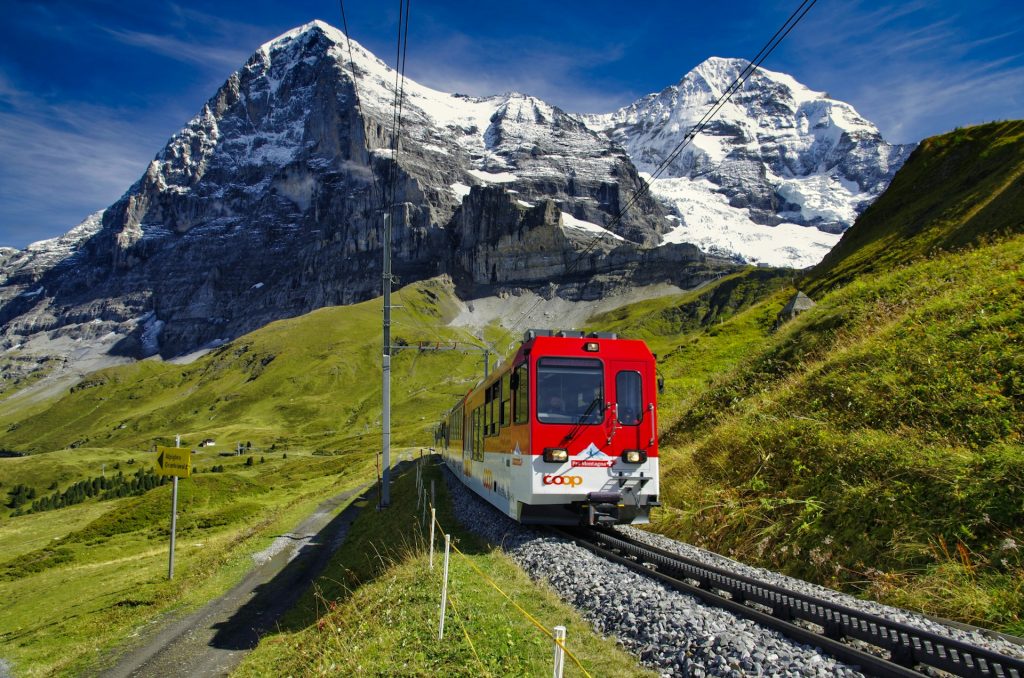
When planning an independent alpine escape, Switzerland solo travel runs on a schedule you can set your watch to, and a landscape that makes you forget to check the time at all. Trains arrive within seconds of their posted minute. Lakes sit mirror-still beneath mountains that look almost too precise to be real. For the solo woman traveler over fifty, this combination — total reliability paired with staggering natural beauty — makes the country one of the easiest, safest, and most rewarding trips in Europe.
Switzerland solo travel asks very little of you beyond showing up. The country is compact, the transit system is the best on the continent, and the cultural default is order rather than chaos. If you want a trip where nothing goes wrong and everything looks like a postcard, this is very often it.
Is Switzerland Safe for Solo Female Travelers Over 50?
Switzerland consistently ranks among the safest countries in the world, and that safety is not an abstract statistic — it’s something you feel within the first hour. Streets are clean and well-lit, public transport runs late and reliably, and violent crime is rare enough that it barely factors into planning a trip here at all.
The main practical consideration is not personal safety but cost, and altitude for those hiking higher trails. Switzerland is expensive, consistently among the priciest countries in Europe, and it’s worth budgeting for honestly rather than being surprised by it mid-trip. For the Wandersister traveler who prioritizes quality and ease over minimizing spend, that cost buys genuine peace of mind and exceptional infrastructure in return.
German, French, and Italian are all official languages depending on the region, but English is widely spoken in every tourist area, and Swiss precision extends to signage — you are rarely confused about where you are or where to go next.
Where to Stay: Safe Swiss Regions for Women Over 50
Switzerland rewards a multi-base approach more than most countries, since its regions differ so distinctly in character.
Lucerne makes an outstanding first base — a compact, walkable old town on a lake, framed by mountains, with a wooden covered bridge (the Kapellbrücke) that’s genuinely worth the postcard reputation. It’s central enough to reach most of central Switzerland easily by train, and calm enough in the evenings that a solo woman never feels exposed.
Interlaken, sitting between two lakes and beneath the Jungfrau massif, is the natural base for mountain excursions — smaller and more outdoorsy than Lucerne, built almost entirely around access to the Alps. Zermatt, car-free and dominated by views of the Matterhorn, is the place to base yourself if the mountains themselves are the whole point of the trip. Geneva and Bern offer a more urban, cultured alternative — Geneva international and lakeside, Bern a UNESCO World Heritage old town that feels almost untouched by time.
Wandersister Tip: If choosing only one base for a first visit, Lucerne offers the best single combination of walkability, lake views, mountain access, and evening atmosphere. It is the base that asks you to make the fewest compromises.
Two more stays we love: Mandarin Oriental Palace, Luzern, and Art Deco Hotel Montana.
Experiencing the Alps: A Scenic Switzerland Itinerary Without a Car
This is where Switzerland genuinely sets itself apart from nearly every other mountain destination on earth: you do not need to drive to see the Alps properly. The country’s rail network reaches deep into terrain that would otherwise require serious hiking or a car — trains climb to glacier viewpoints, cross valleys on dramatic viaducts, and connect towns that feel impossibly remote, all on a precise, easy-to-navigate schedule.
The Jungfraujoch, “Top of Europe,” is reachable entirely by train from Interlaken, climbing to over 3,400 meters through tunnels carved directly into the mountain. The Glacier Express, connecting Zermatt and St. Moritz, is one of the most celebrated scenic train journeys in the world, crossing 291 bridges and passing through 91 tunnels over eight hours of continuously changing alpine scenery. Shorter, equally beautiful options include the Golden Pass Line through Lucerne and Montreux, ideal for a single spectacular day rather than a full journey.
A Swiss Travel Pass covers trains, buses, and boats across the country and is genuinely worth the cost for a trip of more than a few days, removing the need to think about individual tickets at all.
Wandersister Tip
Book a window seat on the side of the train facing the more dramatic scenery for whichever route you choose — a quick search before departure tells you which side that is for each specific journey, and it makes a meaningful difference to the experience.
The Best Time to Visit Switzerland for Solo Travelers
Switzerland has two genuinely distinct high seasons, and choosing between them shapes the whole trip. Summer, roughly June through September, offers the best hiking conditions, longest days, and full access to high-altitude trails and viewpoints — also the busiest and most expensive period, particularly in mountain resort towns. Winter, December through March, transforms the country into a ski destination, with Zermatt and the surrounding resorts at their most atmospheric, though many higher trails and some rail routes reduce service.
Late spring and early autumn offer the best value and thinner crowds, with wildflowers in bloom in May and June, and the first snow dusting peaks by October — genuinely beautiful shoulder-season windows that reward the traveler willing to skip peak season.
Dining Alone: Swiss Food and Culture Worth Experiencing
Switzerland’s food culture is built for solo enjoyment in a way that surprises many first-time visitors. Fondue and raclette, the country’s two most iconic dishes, are traditionally communal, but solo diners are entirely welcome at the small, cozy restaurants that specialize in them, and a single-serving fondue set is standard, not unusual. Mountain huts and lakeside cafés make unhurried solo lunches genuinely pleasant, particularly with a view of the Alps as company.
Switzerland’s chocolate and cheese traditions run deep enough to justify entire afternoons — a chocolate-making workshop in Lucerne, a cheese cellar tour in Gruyères, or simply an hour at a proper Swiss bakery are all easy, low-pressure solo activities that reward genuine curiosity.
Getting Around Safely: Utilizing the Swiss Rail Network
Switzerland’s public transport is widely regarded as the best in the world, and this is not an exaggeration. Trains, buses, and boats connect nearly every corner of the country with a precision that makes even complex, multi-leg journeys genuinely stress-free. Connections between train and bus are frequently timed to the minute, and the network reaches remote alpine villages that would otherwise require a car and considerable driving confidence.
This makes Switzerland one of the very few mountain destinations where a solo woman can access dramatic, remote scenery without ever needing to drive — a genuine and significant advantage over comparable destinations elsewhere in the world.
Two more ways to go deeper on your own: Jungfraujoch – Top of Europe, and Mount Pilatus from Lucerne.
For a calm, easy arrival, book a private airport welcome pickup straight to your hotel.
Switzerland runs on its trains, and planning them is half the pleasure. You can compare routes, times, and fares — and book ahead in English — through Omio, so your scenic days are settled before you arrive.
Practical Travel Tips for Your Switzerland Solo Travel Trip
Switzerland uses the Swiss franc, not the euro, despite being surrounded by eurozone countries — worth confirming before you go, as card payment is widely accepted but cash machines dispense francs. The country is genuinely expensive; a coffee or a simple meal costs meaningfully more than in most of the rest of Europe, and budgeting with that reality in mind avoids unwelcome surprises.
Comfortable, broken-in walking shoes matter here more than almost anywhere — even a “gentle” alpine town involves considerable walking on inclines, and higher-altitude excursions bring genuinely cooler temperatures regardless of season. Layers are essential year-round, since mountain weather shifts quickly and dramatically compared to the valley towns below.
Compare fares and book your flights to Switzerland well in advance.
Why Switzerland Belongs on Your Solo Travel Wishlist
Switzerland offers the solo woman traveler something close to a guarantee: precision, safety, and staggering natural beauty, all accessible without a car, a language barrier, or any real logistical risk. It asks for a genuine budget and rewards it generously — with mountain views reached by train rather than trail, with lake towns that feel curated for calm rather than chaos, and with a level of infrastructure that removes nearly every practical worry a first-time independent traveler might carry. For a woman over fifty seeking a trip where the only real decision is which window seat to choose, mastering Switzerland solo travel delivers as completely, and as reliably, as the country that perfected it.
Ready to plan your own Swiss adventure? Read our guide on how to plan a solo trip for the full framework, browse more Wandersister destination guides, or download the free Companion Vetting Toolkit at wandersister.com if you’re dreaming of sharing a Glacier Express window seat with a Travel Sister.
For the bigger picture, see our complete guide to solo travel for women over 50. Wherever you go, sort your travel insurance for women over 50 before you leave.
When you’re ready to plan it — and to swap notes with other women 50+ who’ve done it or are dreaming of it — come inside the Wandersister Circle, our private space for independent women who travel solo. It’s free to step inside, and the solo female traveler over 50 will find good company waiting.