
Tokyo has a reputation, among travelers who haven’t yet been, for being overwhelming — a city too large, too fast, too foreign to navigate comfortably alone. The reality, for the woman willing to give it a few days, is almost the opposite. Tokyo is one of the safest, most meticulously organized, and most quietly welcoming cities in the world for a solo woman traveler — a place where confusion dissolves remarkably quickly into a particular kind of calm competence.
For women over fifty specifically, Tokyo offers something increasingly rare: a major world city that rewards careful attention rather than reckless energy, and treats an older solo traveler with genuine, unremarkable respect rather than curiosity or concern. Tokyo solo over 50 is, in many ways, an ideal match — a city built on precision and consideration meeting a traveler who has spent decades cultivating exactly that same quality in herself.
Why Tokyo Works Beautifully for Solo Women
Tokyo’s reputation for safety is not exaggerated. It is consistently ranked among the safest major cities in the world, with extremely low rates of violent crime and a cultural emphasis on order and consideration that makes solo travel here feel notably different from most other global capitals. Bags left momentarily unattended at a café table remain untouched. Trains run with such precision that missing one rarely costs more than a few minutes. Streets, even in the busiest districts, feel organized rather than chaotic once you understand their underlying logic.
This foundation of safety and order means the mental energy a solo traveler often spends on vigilance elsewhere can, in Tokyo, be redirected almost entirely toward genuine curiosity and enjoyment.
Navigating the City Without Fear
Tokyo’s train and metro system, while initially appearing dauntingly complex on a map, is in practice one of the most reliable and well-signed transit networks anywhere in the world. Station signage includes English throughout, platform numbers are clearly displayed, and trains run with a punctuality that borders on the remarkable.
A prepaid Suica or Pasmo card, available at any station machine, eliminates the need to navigate ticket pricing for individual journeys — simply tap in, tap out, and the correct fare is deducted automatically. This single small piece of preparation removes most of the logistical friction a first-time visitor anticipates.
Wandersister Tip
Download the Japan Travel by NAVITIME app before you arrive. It provides offline-capable train routing in English and is considerably more reliable for navigating Tokyo’s rail network than general map apps.
Where to Stay: Neighborhoods Worth Knowing
Tokyo is less a single city than a collection of distinct districts, each with a markedly different character, and choosing the right base shapes the entire feel of a trip.
Shibuya and Shinjuku offer the neon, high-energy Tokyo of popular imagination — exciting to experience but not necessarily where a woman traveling solo will want to base herself for a full week. For that, consider Yanaka, one of the few districts to survive both the 1923 earthquake and wartime bombing largely intact, offering narrow lanes, traditional wooden houses, small temples, and a noticeably slower pace than the city’s more famous districts. Or Kagurazaka, a former geisha district with cobblestone streets, excellent small restaurants, and a genuinely elegant, quiet atmosphere within easy reach of the city center.
For a base with slightly more polish and convenience, Ginza offers upscale shopping and dining alongside excellent transit connections, in a district that feels considerably calmer after dark than Shibuya or Shinjuku.
A few stays we love, from grand to intimate: The Peninsula Tokyo, the ryokan-inspired Hoshinoya Tokyo, and the calm boutique Hotel Niwa Tokyo.
A Perfect Solo Day in Tokyo
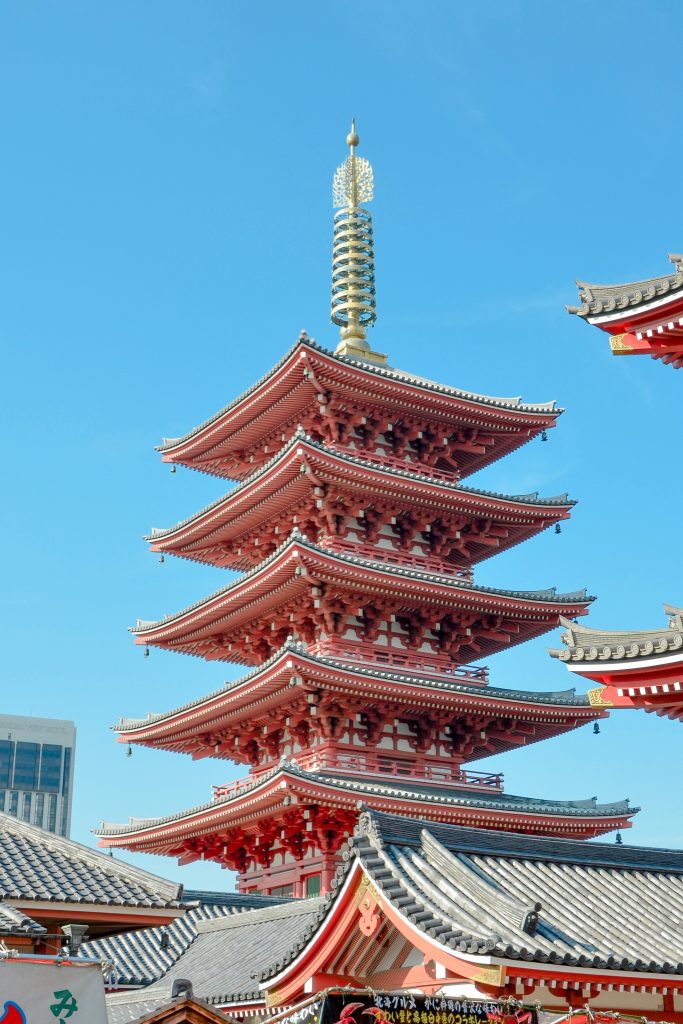
Begin in a district like Yanaka or Asakusa, where mornings unfold slowly — a coffee at a small local café, a wander through quiet temple grounds before the day’s crowds arrive at Senso-ji, Tokyo’s oldest and most significant temple.
By midday, move toward the Imperial Palace East Gardens, a genuinely peaceful green space in the middle of the city, ideal for an unhurried walk and a simple lunch on a bench overlooking the moat. In the afternoon, the quieter galleries of the Nezu Museum, with its exceptional collection of Japanese and East Asian art set within a beautifully designed garden, offer a considered, uncrowded alternative to Tokyo’s larger, more popular museums.
As evening arrives, find a small izakaya — Japan’s version of a neighborhood bar and small-plates restaurant — for dinner. Solo dining is entirely normal in Tokyo, with many establishments specifically designed around counter seating that makes eating alone not just comfortable but genuinely sociable, as conversation with the chef or neighboring diners often develops naturally.
Wandersister Tip
Look for izakayas with a counter facing the kitchen rather than table seating. Solo diners are common at the counter, and the direct view of food being prepared makes for an engaging, entirely comfortable meal alone.
Culture and Experiences Worth Your Time
Tokyo’s cultural offerings are vast enough to fill months rather than days, which makes selectivity essential. The teamLab Planets digital art museum offers a genuinely immersive, almost meditative experience that photographs poorly but rewards being physically present. The Meiji Shrine, set within an unexpectedly dense forest in the heart of the city, offers a profound contrast to the surrounding urban intensity — arrive early to experience it at its most peaceful.
For a different kind of cultural immersion, a traditional tea ceremony experience, widely available through small studios across the city, offers both genuine cultural insight and a naturally solo-friendly activity — most ceremonies are conducted with quiet individual attention regardless of group size.
Two easy ways to go deeper on your own: a backstreet food tour led by a local, and a day trip to Kamakura, the seaside temple town an easy train ride away.
Practical Notes for the Solo Traveler
English signage is extensive throughout central Tokyo, particularly around transit and major attractions, though everyday spoken English can be more limited than in European capitals — a translation app with camera functionality, such as Google Translate’s text-scanning feature, proves genuinely useful for menus and signage.
Cash remains more commonly used than in much of Europe, despite Japan’s technological reputation — carrying sufficient yen for smaller establishments, particularly traditional restaurants and shops, avoids unnecessary friction. Convenience stores, found on nearly every corner, are reliable for ATM withdrawals, light meals, and genuinely excellent coffee at any hour.
The best time to visit balances weather against crowds: April brings cherry blossoms and considerable crowds, while November’s autumn foliage offers comparable beauty with noticeably fewer visitors. Early spring or late autumn, just outside the peak bloom windows, often provides the most comfortable balance of pleasant weather and manageable crowds.
For deeper exploration beyond the capital, the Wandersister Japan Guide offers additional destinations and practical tips for extending a Tokyo trip into the wider country.
Fly into Tokyo (Haneda or Narita) and compare fares early — book your flights to Tokyo well in advance for the best value.
Why This Trip Belongs on Your List
Tokyo rewards precisely the kind of traveler Wandersister is built for — a woman who prefers to move thoughtfully rather than rush, who finds genuine pleasure in small, well-chosen experiences over exhaustive checklists, and who is entirely capable of navigating a foreign, unfamiliar city with the same quiet competence she has spent decades building in every other area of her life.
Far from the overwhelming reputation that precedes it, Tokyo solo over fifty is, in practice, one of the calmest, safest, and most rewarding cities a woman can choose for her next adventure.
Ready to plan your own Tokyo adventure? Browse the Wandersister Japan Guide for more, or download the free Companion Vetting Toolkit at wandersister.com if you’re dreaming of exploring Japan with a Travel Sister by your side.
Planning the rest of your trip? See our guides to Japan solo female travel over 50 and Kyoto solo travel, and the bigger picture in solo travel for women over 50. And sort your travel insurance for women over 50 before you go.
When you’re ready to plan it — and to swap notes with other women 50+ who’ve done it or are dreaming of it — come inside the Wandersister Circle, our private space for independent women who travel solo. It’s free to step inside, and the solo female traveler over 50 will find good company waiting.