
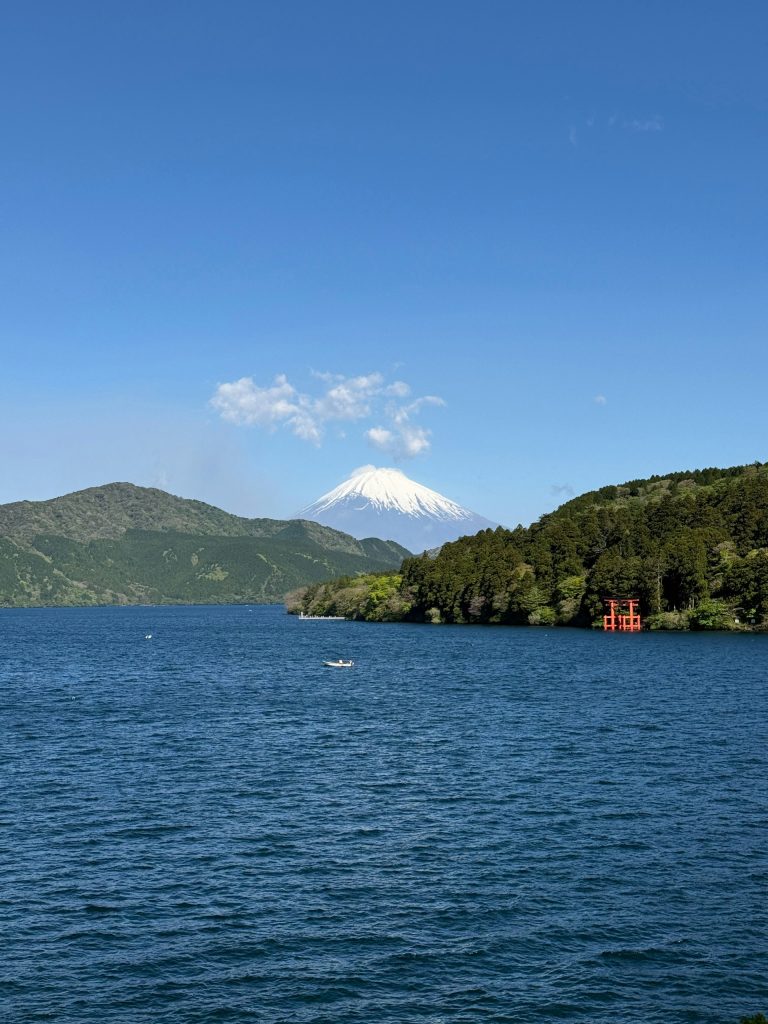
There’s a moment on the Hakone Ropeway when Mount Fuji suddenly appears through the clouds, framed by the volcanic steam of Owakudani valley below — the kind of view worth planning an entire trip around. When mapping out Hakone solo travel, the region doesn’t try to compete with Tokyo’s energy or Kyoto’s temples. It offers something else entirely: mountains, hot springs, art, and lake views, all reachable in under two hours from the capital, all genuinely manageable alone.
For the independent woman traveler who has read about Tokyo’s electric safety and Kyoto’s historic serenity, stepping into Hakone rounds out a Japan Golden Route itinerary with something quieter still. It transforms a standard vacation corridor into a deeply restorative sequence—anchoring a hot spring town built explicitly for slowing down, where the main activity most days is simply looking at something beautiful.
Is Hakone Safe for Solo Female Travelers Over 50?
Hakone consistently ranks among the safest destinations in Japan for solo women, with an official safety rating of 4.4 out of 5 and a position among the top ten safest towns in the country for solo female travelers. Street harassment is close to nonexistent, respect for personal space is deeply embedded in the culture, and the crime that does occur is almost exclusively petty — the occasional bag left unwatched, nothing more.
The town is also small and calm compared to Tokyo, which makes it easy for many women to feel at ease here, even more than in the capital. Public transportation is reliable, well-signed, and runs on a schedule you can set your watch to. Positioned directly along the Shinkansen bullet train line, it serves as a peaceful, therapeutic buffer between your fast-paced Tokyo solo travel exploration and the historic temple pathways awaiting your discovery down in Kyoto. As throughout Japan, the ordinary precautions are all that’s genuinely needed.
Is Hakone Walkable for Solo Travelers?
Hakone isn’t a single walkable town so much as a scenic region connected by an unusually charming transport loop, and this is part of its appeal rather than a drawback. The famous Hakone Loop links a train, a cable car, a ropeway, and a pirate-style sightseeing boat across Lake Ashi — meaning even the getting-around becomes part of the experience rather than a logistical chore.
Individual stops within the loop — the shrine area, the Owakudani valley trails, the museum grounds — are genuinely walkable once you arrive, with well-marked paths and manageable distances. Purchasing an official Digital Hakone Free Pass via Klook ahead of time entirely eliminates the hassle of buying individual station tickets, allowing you to glide through the mountain cable cars and volcanic valleys with complete logistical ease.
Where to Stay: Safe Hakone Ryokans for Solo Women
For a solo woman, staying at a traditional Japanese inn is an unmissable cultural milestone. While some rural properties can feel intimidating, securing a reservation at an elegant luxury ryokan via Expedia ensures you receive a warm, English-friendly welcome. Many premium Hakone properties feature private, open-air hot spring baths attached right to your room, allowing you to soak in complete privacy while your multi-course kaiseki dinner is served directly to you in your own sanctuary.
Ryokans range considerably in price, and genuinely excellent options exist across the spectrum. For a more budget-conscious solo stay that still includes an onsen soak, guesthouse-style properties blending ryokan tradition with hostel-style shared spaces offer both affordability and easy, natural opportunities to meet fellow travelers over a shared meal or in a communal lounge.
Wandersister Tip: Book a ryokan with a private in-room onsen if your budget allows. Public bathhouses in Hakone are traditionally gender-separated and entirely comfortable for solo women, but a private bath offers complete flexibility — soak whenever you want, for as long as you want, with zero coordination required.
Two more stays we love: the exquisite Gora Kadan, and the historic The Fujiya Hotel.
Onsen Etiquette: Embracing the Ritual of the Hot Springs
For many independent women, stepping into a traditional public onsen (hot spring bathhouse) brings a wave of anticipatory anxiety, primarily surrounding the strict cultural rules of nudity and communal bathing. It is an entirely natural hesitation, but understanding the ritual beforehand transforms it from a source of friction into a deeply meditative experience of absolute comfort.
First, public onsens are strictly segregated by gender; look for the traditional split curtains (noren) at the entrance—typically red or pink for women. Once inside the changing room, you will place all your clothing and personal items into a designated locker or basket. You enter the bathing area completely unclothed, bringing only the small, white “modesty towel” provided by your accommodation.
The golden rule of the onsen is that the volcanic spring water must remain entirely pure. Because of this, you must thoroughly wash and rinse your entire body at the sit-down shower stations before ever touching the hot spring water. Handheld mirrors, pristine seating stools, and high-end soaps are provided at each station. Once you are completely clean, step gently into the thermal water to soak. Keep your modesty towel out of the pool by resting it folded on top of your head or on a nearby rock side.
Voice levels inside the onsen are kept to a soft, respectful whisper. It is a shared sanctuary of silence and restoration, where the ordinary stresses of travel simply melt away into the rising steam.
A Perfect Solo Day in Hakone: The Ultimate Itinerary
Begin at Owakudani, the volcanic valley whose sulfurous steam vents give Hakone its geothermal character. The short walking trail here offers genuinely dramatic views, and the local specialty — a black egg boiled in the volcanic hot springs, said to add years to your life with each one eaten — is a small, memorable ritual worth the slightly sulfurous smell.
From there, the Hakone Ropeway carries you down toward Lake Ashi, where a pirate-ship-styled sightseeing boat crosses the water beneath one of Japan’s most photographed views of Mount Fuji, weather permitting. The Hakone Shrine, with its iconic red torii gate rising directly from the lake, rewards an unhurried visit — arrive early or late in the day for a quieter version of one of the most photographed spots in the country.
In the afternoon, the Hakone Open-Air Museum offers a genuinely different kind of art experience — sculptures by Picasso, Henry Moore, and others set across landscaped outdoor grounds with Mount Fuji occasionally visible in the distance, making it one of the most rewarding unhurried solo afternoons anywhere in Japan.
Exploring Beyond the Main Loop: Hiking and Excursions
For a longer stay, Mount Kintoki offers a genuinely rewarding hike with panoramic views for those wanting more activity than the main loop provides. The Mishima Skywalk, a striking suspension bridge with Mount Fuji views, makes a worthwhile half-day addition for travelers extending beyond a single day.
Two easy ways to explore on your own: the Hakone loop, and a private day tour with a driver-guide.
The Best Time to Visit Hakone for Solo Travelers
Hakone rewards visiting in spring (cherry blossoms, generally April) and autumn (dramatic foliage, particularly late October through November), when the landscape frames Mount Fuji especially beautifully. Winter offers the clearest views of Fuji itself, since clear cold days often provide the least cloud cover, alongside the particular pleasure of a hot spring soak against a cold mountain air. Summer brings warmer, hazier conditions that can obscure Fuji entirely for days at a time — worth knowing if seeing the mountain itself is a priority.
Practical Travel Tips for Your Hakone Solo Travel Trip
Hakone is easily reached from Tokyo by train, typically under two hours, making it genuinely manageable as either a long day trip or, better, an overnight stay to properly experience a ryokan and its onsen. A Japan Rail Pass or the region-specific Hakone Free Pass both offer good value depending on how the rest of your Japan itinerary is structured — worth checking Japan National Tourism Organization’s official transport guidance before booking.
English signage is reasonably good throughout the main tourist loop, though smaller ryokans and local restaurants may have more limited English — a translation app remains genuinely useful. Comfortable shoes matter here as much as anywhere in Japan, given the walking involved at Owakudani and around the shrine and lake areas.
Fly into Tokyo (Haneda or Narita), then continue by train — compare fares and book your flights to Tokyo well in advance.
Why Hakone Belongs on Your Japan Solo Travel Wishlist
Hakone asks very little of the independent traveler and gives back a great deal in return: a night in a ryokan, a soak in a mountain hot spring, a shrine gate rising from still water, and — with some luck and clear skies — Mount Fuji itself. Ultimately, mastering Hakone solo travel completes a Japan itinerary built entirely around the pace this stage of life actually calls for: slower, quieter, and genuinely restorative.
While exploring these hot spring valleys independently is deeply peaceful, many women dream of sharing these bucket-list cultural milestones without navigating the foreign logistics entirely alone or taking on the heavy financial burden of a luxury single room rate.
If you are looking for a clear blueprint to help you find a like-minded companion for your next journey, I wrote a comprehensive guide expressly for this chapter. In my book, The Wandersister Roadmap: How Independent Women Over 50 are Safely Exploring the World, Splitting Costs, and Creating New Lifelong Sisterhoods, I break down the exact practical frameworks to help you vet compatible companions, share premium resort expenses safely, and build a lasting global network of travel sisters on your own terms.
Ready to plan your own Japan journey? Read our guides to Tokyo and Kyoto solo travel, or download the free Companion Vetting Toolkit at wandersister.com if you’re dreaming of sharing a ryokan stay with a Travel Sister.
For the bigger picture, see our complete guide to solo travel for women over 50. Wherever you go, sort your travel insurance for women over 50 before you leave.
When you’re ready to plan it — and to swap notes with other women 50+ who’ve done it or are dreaming of it — come inside the Wandersister Circle, our private space for independent women who travel solo. It’s free to step inside, and the solo female traveler over 50 will find good company waiting.