
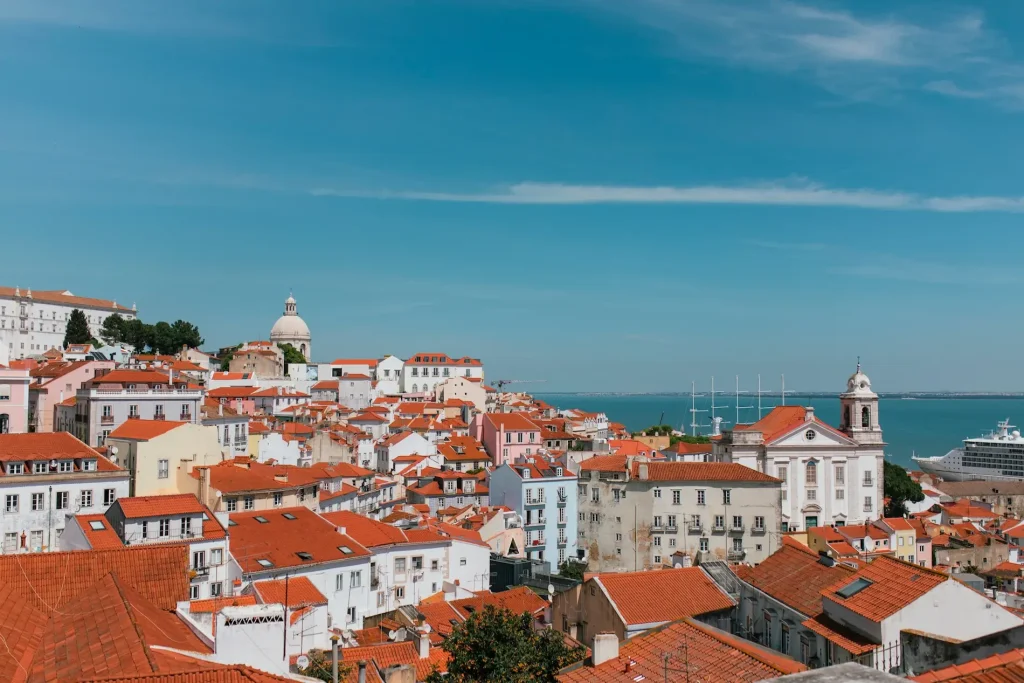
If you’ve been waiting for a sign to take that first solo trip to Europe — or your first in a long while — Portugal is it. It’s the soft landing: safe, affordable, walkable, wildly beautiful, and full of people who are kind to a woman traveling on her own. You can arrive knowing not a word of Portuguese and be perfectly fine by dinner. Of all the places to begin, or to begin again, few make it as easy — or as lovely — as this one.
Here’s the real guide to Portugal for solo women over 50: how safe it truly is, when to go, where to lose yourself, and why so many women arrive for two weeks and start quietly wondering how they might stay.
How Safe Is Portugal for Solo Women Over 50? The Honest Answer
Yes — remarkably so. Portugal ranks among the very safest countries in the world (seventh on the Global Peace Index), and Lisbon regularly tops lists as one of Europe’s safest and most affordable city escapes for exactly your kind of trip. Violent crime is rare, women walk and dine alone here as a matter of course, and the culture is warm and respectful rather than intrusive. If safety is the thing weighing on you, it helps to see where Portugal sits among the world’s most reassuring destinations — our guide to The Safest Countries for Solo Women Over 50 puts it in context.
The one thing to watch is ordinary and easily managed: pickpockets in the busiest tourist spots — Lisbon’s famous tram 28, crowded metro cars, the packed miradouros (viewpoints) at sunset. Wear a crossbody bag you can keep in front of you in a crush, split your valuables between two places, and you’ve handled the only real risk the country poses. Beyond that, you can relax in a way that genuinely surprises women who arrived expecting to feel on guard.
When to Visit Portugal for a Solo Trip (Best Months & Seasons)
Portugal is a year-round country, but spring (April to June) and fall (September to October) are the sweet spots: warm days, soft light, thinner crowds, and prices below the July–August peak. Summer is glorious on the Algarve but hot and busy; winter is mild and quiet, and the cities are wonderful in low season if you don’t mind cooler evenings. For a first trip, aim for May or late September and you’ll catch Portugal at its most welcoming.
Where to Go in Portugal on a First Solo Trip
Portugal is small and beautifully connected, so you can see a lot without rushing. Think of it as three or four distinct worlds.
Lisbon is where most first trips begin, and rightly. It’s a hilly, tiled, sunlit city of yellow trams, riverside light, and some of the best food in Europe — the 2026 Michelin Guide only confirmed what everyone already knew. It’s safe, endlessly walkable (bring good shoes for those hills), and effortlessly stylish. Give it three or four days from a well-placed hotel in central Lisbon: the lanes of the Alfama, a fado dinner, custard tarts warm from the oven in Belém, a sunset from a miradouro with a glass of wine. For a day-by-day plan, see A Week in Lisbon Solo: The Wandersister Way.
Sintra, less than an hour from Lisbon, is the fairy-tale day trip — a green hill crowned with palaces out of a storybook, the wild Pena Palace and the mossy Quinta da Regaleira among them. Go early, and let a guided Sintra day trip handle the logistics.
Porto and the Douro Valley are the north’s reward. Porto is all riverside tiles, port-wine lodges, and the Livraria Lello, one of the loveliest bookstores on earth; you can book a stay in riverside Porto and wander from there. Beyond it the Douro Valley unfolds — terraced vineyards along a slow green river, best seen from the deck of a boat or the window of a scenic train.
The Algarve is the south: golden cliffs, hidden coves, whitewashed towns, and some of the warmest water in Portugal. Lagos and Tavira make the loveliest bases — you can book a hotel in Lagos for the dramatic cliffs and nightlife, or find a quieter stay in Tavira for old-town charm and calm. The coastal walks are spectacular and easy, and the pace suits a woman who wants sea air and nothing to prove. It’s also, not coincidentally, where a great many women end up staying longer — more on that below.
For a first trip, a wonderful shape is Lisbon and Sintra, then the train north to Porto and the Douro — about ten days. Add three or four more for the Algarve if you have two weeks.
Getting Around Portugal Alone: Trains, Tours, and No Car Needed
Here’s a relief: you do not need to rent a car or drive. Portugal’s trains are clean, comfortable, and cheap, and the fast service links Lisbon and Porto in under three hours. Within the cities you walk, ride historic trams, or take inexpensive taxis and rideshares. For the Douro and the Algarve, an easy train or a small-group day tour does the driving for you, so you can look out the window instead of at a map. It’s one of the least stressful countries in Europe to move around alone.
As for paperwork, it couldn’t be simpler for American travelers: no visa for stays up to 90 days, just your passport. English is widely spoken, especially in Lisbon, Porto, and the Algarve, so you’ll manage beautifully even with only obrigada (thank you) in your pocket.
Best Solo Experiences in Portugal for Women Over 50
Some of Portugal’s best moments are the ones you can savor alone or in easy company. Linger over a fado evening in the Alfama — the country’s soulful, aching folk music, heard best in a small Lisbon tavern over dinner. Give yourself a Douro Valley wine cruise, a slow river day among the terraces with someone else at the wheel. And down south, walk the Algarve cliffs on the Seven Hanging Valleys trail, or join a small-group boat to the Benagil sea caves. Then simply sit, often — a coffee and a pastel de nata in a tiled café, a glass of vinho verde as the light goes gold. Portugal rewards the woman who slows down.
From Two Weeks to Two Years: Why Women Stay Longer in Portugal
Here’s the thing about Portugal that no other first-trip destination quite matches: a remarkable number of women come for two weeks and find themselves quietly calculating how they might stay for two months — or two years.
It’s not hard to see why. Portugal offers a rare combination of safety, warmth, affordability, healthcare, and beauty, and it has become one of the most welcoming places in the world for independent women over fifty to spend a real season of their lives. The Algarve and Cascais have thriving communities of English-speaking women who came and never quite left; a furnished two-bedroom near the sea can cost a fraction of what you’d pay at home; and the slower, sunlit rhythm has a way of making “someday” feel like “why not now.”
You don’t have to uproot your life to taste it. This is exactly where co-living comes in — renting a beautiful shared home with other vetted women for a month or a season, community without commitment. If Portugal gets under your skin the way it tends to, our full guide to Co-Living Abroad for Women Over 50 shows you how to do it, safely and without selling your house.
Solo Doesn’t Have to Mean Alone: Sharing Part of Your Portugal Trip
Portugal is one of the easiest places in the world to travel alone — and one of the loveliest to share. If you’d like company for part of it — a Douro cruise, a week on the Algarve, a house to split — the key is choosing that person well. Our vetting toolkit walks you through exactly what to look for before you say yes, and inside The Wandersister Circle you can meet like-minded women heading the same way. And if you’re building toward a whole life of independent travel on your own terms, our book The Wandersister Roadmap is where to begin.
Practical Tips for Your First Solo Trip to Portugal
Pack layers and real walking shoes — those Lisbon and Porto hills are no joke, and the cobblestones ask for good soles. Sort your phone out before you land so your maps and messages work the moment you arrive; our guide to staying connected abroad shows you the easy way. Carry a little cash, though cards work almost everywhere, and keep that crossbody bag in front in a crowd. And buy travel insurance that covers you properly before you go.
And after a long flight, there’s a lot to be said for not fumbling for a taxi: book a private airport transfer in advance and a driver meets you at Lisbon arrivals with your name on a sign and a fixed fare — a small kindness to your jet-lagged self.
Some trips you have to steel yourself for. Portugal isn’t one of them. It’s safe, it’s affordable, it’s astonishingly beautiful, and it seems built to make a woman traveling alone feel capable and at home. Come for the trams and the tarts and the golden cliffs — and don’t be surprised if, somewhere over a glass of vinho verde as the sun goes down, you start wondering how soon you can come back, and how long you might stay.